
Can AI Really Take Restaurant Orders Over the Phone?
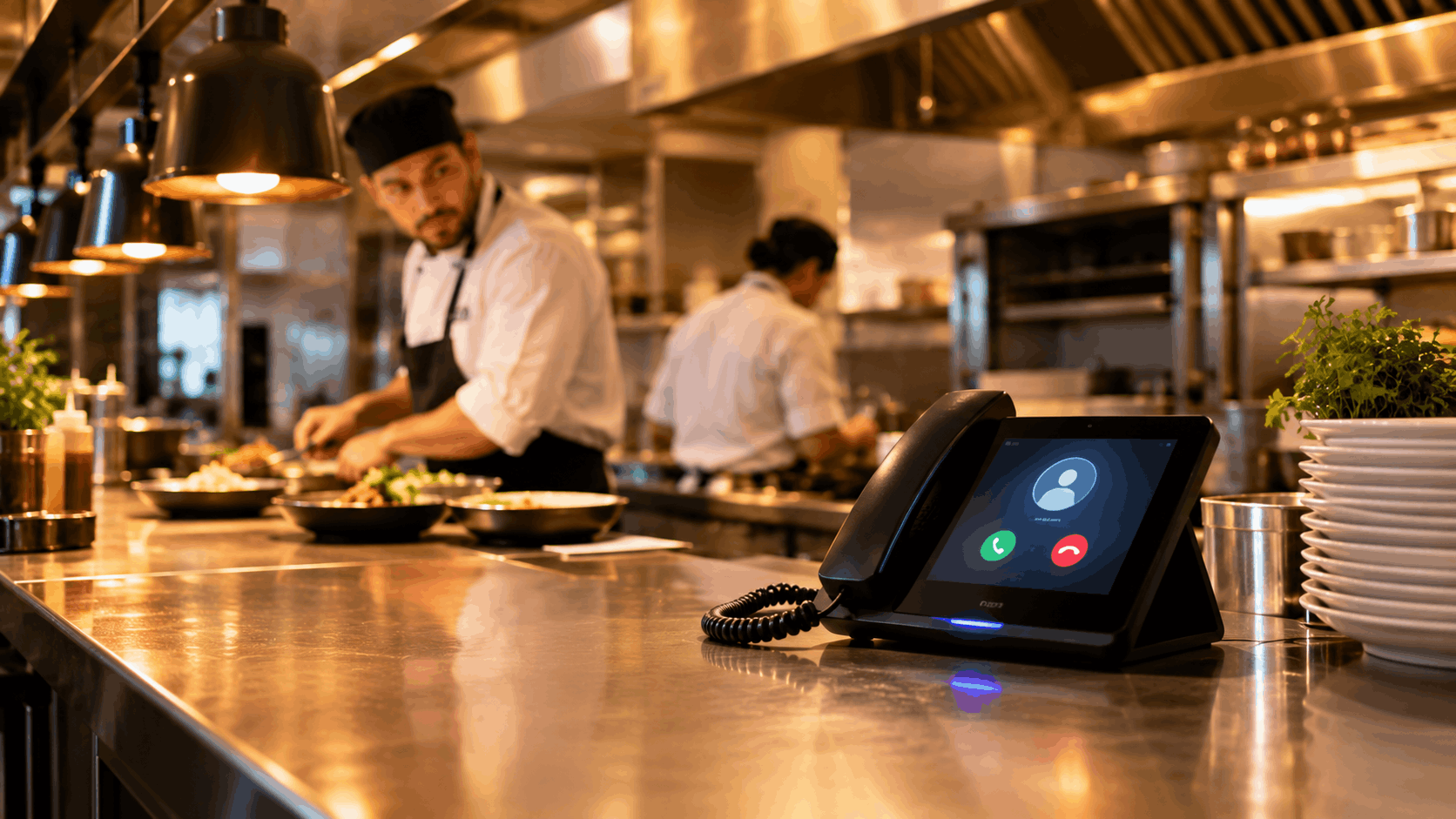
It's a fair question, and a skeptical one. Restaurant owners hear a lot of bold claims about technology, and "AI can take your phone orders" sounds like exactly the kind of thing that works great in a demo and falls apart the moment a real customer starts talking with an accent, background noise, or a complicated request. So let's actually look at what's happening when a restaurant uses an ai voice agent for restaurants to handle phone orders, and where the honest limitations are.
What Actually Happens When a Customer Calls
When someone calls a restaurant that uses a restaurant ai phone assistant, the call is answered immediately. No hold music, no ringing four or five times while a server debates whether to leave a table. The system greets the caller and asks how it can help, similar to how a host would answer the phone during a normal shift.
From there, the caller talks the way they normally would. "I'd like to order a large pepperoni pizza and a side of garlic bread." The system processes what was said, matches it against the restaurant's actual menu, and confirms the order back to the caller before finalizing it.
This is different from the old-style phone trees that ask you to press 1 for this and 2 for that. There's no menu of options to navigate. The caller just speaks naturally, and the system figures out what they want.
So Can It Handle Real Orders, With Real Complications?
Yes, for the most part, and this is where it gets genuinely useful rather than just being a gimmick. A well built system can handle:
- Multiple items in one order
- Modifiers, like "no onions" or "extra cheese"
- Substitutions, within reason
- Clarifying questions when something is ambiguous, such as asking which size when a caller just says "a pizza"
Where it gets trickier is with highly unusual requests, very heavy background noise, or callers who speak in a way that's hard for any system, human or otherwise, to parse quickly. This is exactly why a good setup includes a way to bring in a real staff member when needed, rather than forcing the AI to guess and potentially get an order wrong.
Why This Matters More Than It Might Seem
Phone orders are often treated as an afterthought compared to online ordering or in-person service, but they still represent real revenue for a lot of restaurants, especially for takeaway and delivery. The problem is that phone orders are also the easiest to lose. If nobody picks up, or if a rushed staff member mishears an order during a busy dinner service, that's a customer who might just call somewhere else next time.
A restaurant ai phone assistant solves the availability problem outright. Every call gets answered, regardless of how busy the kitchen or front of house happens to be. It doesn't get overwhelmed, distracted, or pulled away to deal with something else mid conversation.
What Restaurants Actually Notice After Switching
Owners who've moved to this kind of setup tend to mention a few consistent things. Fewer missed calls, obviously, since that's the most visible change. But also fewer order mistakes, because the system isn't trying to scribble down details while also handling three other things at once. And staff seem to appreciate not being pulled off the floor every time the phone rings during a rush.
There's also a knock-on effect worth mentioning. When phone orders are captured accurately and immediately, they can be sent straight into the same system as every other order type, rather than being written on a notepad and typed in later. This ties into a bigger shift happening across the industry, where restaurant management software is increasingly built to treat every order channel, whether it's a table, an app, or a phone call, as part of one connected workflow instead of separate, disconnected pieces.
Where the Honest Limits Are
It's worth being upfront about this instead of overselling it. An AI voice agent isn't meant to replace a host or manager entirely, and it shouldn't be expected to handle every single call flawlessly without any oversight. Genuinely complicated situations, like a complaint, a large event booking with unusual requirements, or something outside the system's training, still need a person. The point isn't to remove humans from the process. It's to take the repetitive, high-volume calls off their plate so they can focus on the calls and guests that actually need their attention.
Final Thoughts
So, can AI really take restaurant orders over the phone? In most everyday situations, yes, and reasonably well. It answers instantly, understands standard orders including modifiers and substitutions, and knows when to bring in a human for anything genuinely outside its scope. It's not magic, and it's not going to replace good staff, but for the routine, repetitive calls that eat up time during busy shifts, it's proving to be a practical solution rather than just a novelty.
Ready for a smoother shift?