
From Order to Payment: How POS, Kitchen Display, and Reservations Work Together
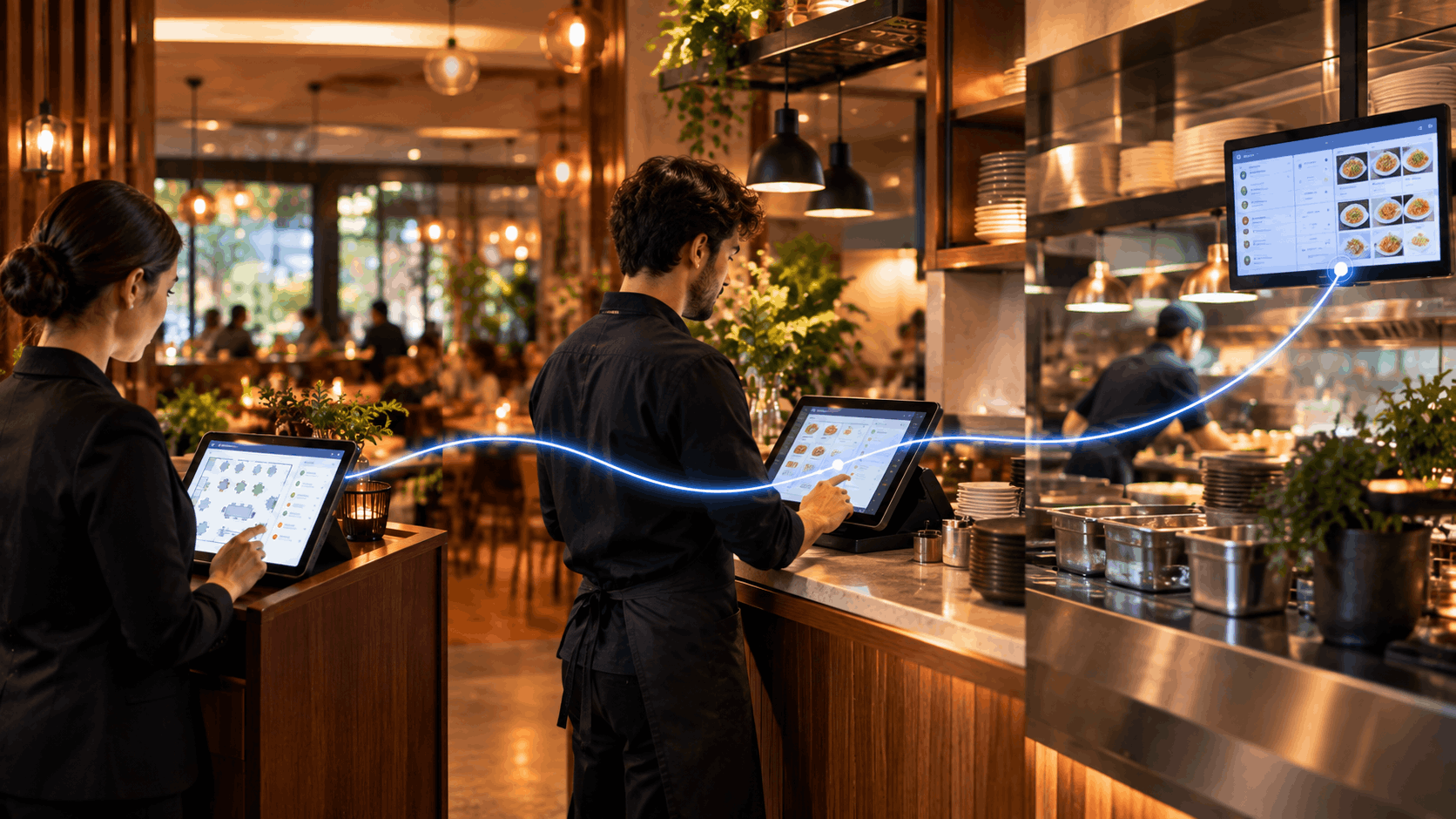
Most guests never think about what happens behind the scenes between booking a table and paying the bill. But for a restaurant to run smoothly, several systems need to work together seamlessly: the booking that got the guest seated, the order that gets sent to the kitchen, and the payment that closes out the visit. When these pieces operate separately, small gaps turn into real problems. When they're connected, the entire guest journey flows without friction. Here's how it actually works.
The Guest Journey, System by System
To understand why connection matters, it helps to walk through a typical visit from start to finish, and see where each system plays its part.
1. The Booking Comes In
It starts with a reservation, whether that's made online, by phone, or through an AI voice agent. A good restaurant booking system checks table availability, confirms the reservation, and places it on a live floor plan, so staff know exactly who's arriving and when.
2. The Guest Is Seated
When the guest arrives, that reservation connects directly to a table on the floor plan. There's no separate step of manually finding where to seat them or re-checking availability again, since the system already has that information ready.
3. The Order Is Taken
Once seated, the order is entered through a restaurant POS and payment system, whether that's a server taking it tableside, a guest scanning a QR code, or a phone order placed ahead of time. The POS captures everything: items, modifiers, and any special requests.
4. The Order Reaches the Kitchen Instantly
This is where a kitchen display system comes in. The moment the order is confirmed at the POS, it's routed automatically to the correct kitchen station, without anyone needing to walk a ticket over or relay details verbally. Staff at each station see exactly what to prepare, in real time.
5. The Meal Is Served
As items are marked ready on the kitchen display, that status flows back to the front of house, so food reaches the table promptly instead of waiting under a heat lamp for someone to notice it's done.
6. The Payment Closes the Loop
Once the meal is finished, payment happens through the same connected system that started the whole process. Bills can be split by item or by guest, multiple payment methods can be applied, and the transaction ties directly back to the original order, without needing to reconstruct anything manually.
Why This Connection Matters More Than It Might Seem
It's easy to think of reservations, ordering, and payments as three separate jobs. In practice, when they're handled by disconnected tools, small gaps appear at every handoff:
- A reservation system that doesn't talk to the floor plan used by staff on the ground
- An order that has to be manually re-entered because the POS and kitchen display aren't linked
- A payment process that requires re-checking the original order because the systems don't share data
Each of these gaps adds time, increases the risk of mistakes, and puts more pressure on staff during exactly the moments when things are already busy.
What Connected Systems Actually Look Like in Practice
When a restaurant runs on properly connected restaurant management software, the difference shows up in small but meaningful ways:
- A booking automatically becomes a seated table, with no manual lookup required
- An order placed at the table appears on the kitchen screen within seconds
- A completed dish updates the front of house without anyone needing to check in
- A bill can be split and paid without staff needing to recalculate anything by hand
None of these individual pieces are complicated on their own. What makes the difference is that they all pull from the same shared information, rather than each system keeping its own separate version of events.
Why Restaurants Are Moving Toward This Kind of Setup
The shift toward connected systems reflects a broader change in how restaurants operate. Guests now interact with a restaurant through more channels than ever (online bookings, QR ordering, delivery, phone calls), and staff are expected to keep up with all of it without added confusion. A disconnected setup asks staff to manually bridge the gaps between tools. A connected one removes those gaps entirely, so the technology supports the pace of service instead of slowing it down.
Final Thoughts
The journey from a booking to a paid bill involves more moving parts than most guests ever realize, and every one of those parts needs to work together smoothly for service to feel effortless. When reservations, ordering, kitchen routing, and payments run on the same connected system, staff spend less time bridging gaps between tools and more time focused on the guests in front of them.
Curious how this looks for your own restaurant? Explore how ERPFY's restaurant POS and payment system connects directly with reservations and kitchen display to bring the entire guest journey into one place.
If you'd like to talk through how it fits your setup, feel free to reach out through the contact page.
Ready for a smoother shift?