
Why 90% of Restaurants Say Integrations Are Their Top POS Priority in 2026
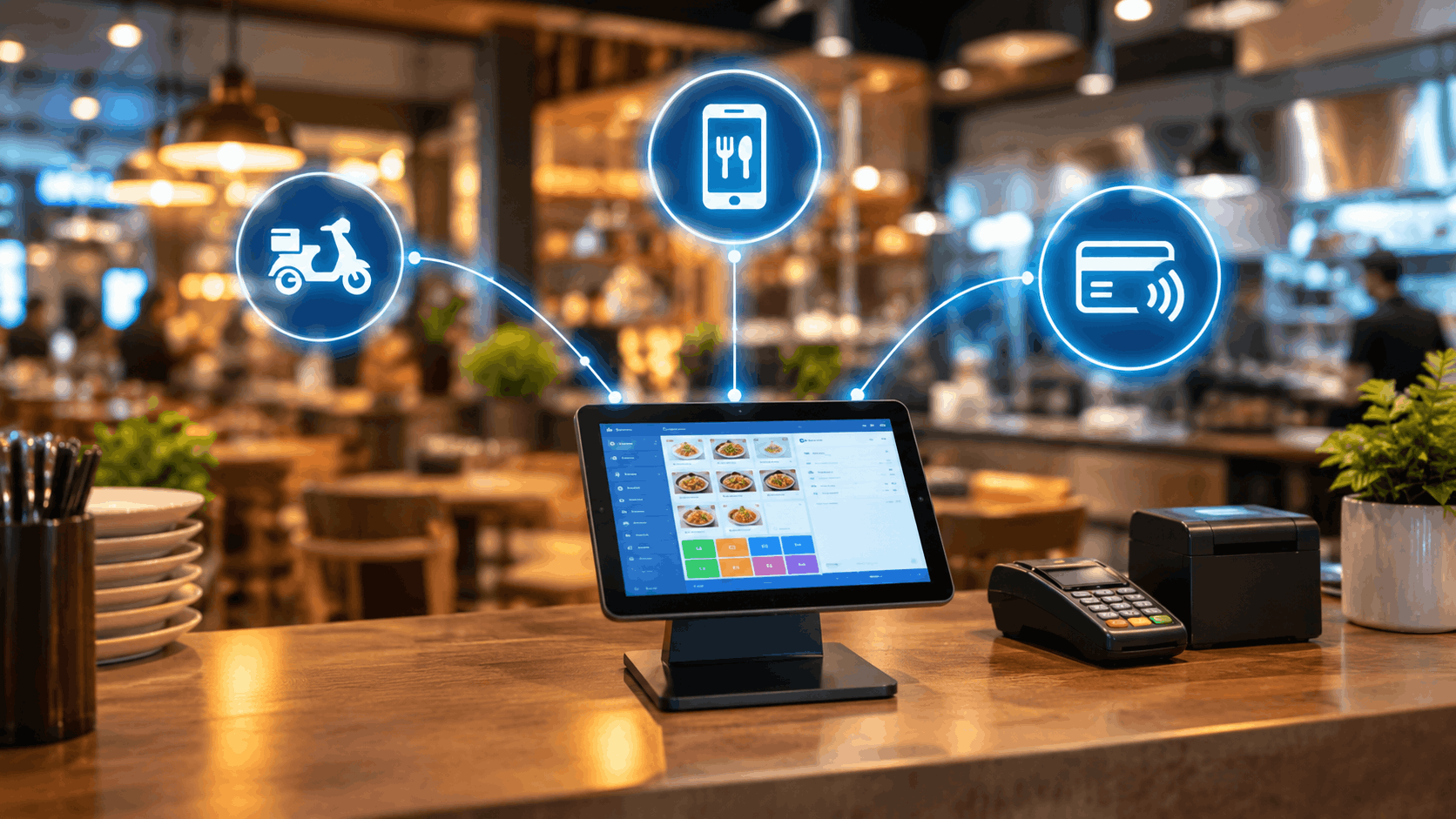
If you've been paying attention to restaurant technology conversations this year, one number keeps coming up: 90% of restaurants identify improving integrations as their top POS priority in 2026. That's not a small trend — it's a near-universal signal that the industry has shifted away from asking "does this POS work" and toward asking "does this POS actually connect to everything else we use.
Here's why integrations have become the defining priority, and what it means for how restaurants should be evaluating their systems going forward.
Why Integrations Suddenly Matter So Much
For years, a POS system's job was simple: process a transaction. Today, that's no longer enough. A POS system used to function primarily as a transaction terminal, but today it can act as the central connection point between multiple restaurant operations. Restaurants aren't just running one system anymore — they're juggling delivery marketplaces, payment providers, kitchen displays, loyalty programs, and reporting tools, often all at once.
The problem is that most of these tools were never designed to talk to each other. And when they don't, the cost lands squarely on restaurant staff.
The Real Cost of Disconnected Systems
When systems don't communicate effectively, employees have to manually enter information repeatedly across different platforms — a delivery order gets typed into the POS by hand, a payment gets reconciled separately in accounting software, loyalty data sits in a completely different dashboard. Each of these manual steps isn't just inefficient — it's a point where errors creep in, time gets wasted, and data ends up inconsistent across systems.
This is exactly why restaurant POS integrations have moved from a "nice to have" to the single most requested capability in the industry this year.
Where Integrations Matter Most Right Now
1. Delivery Integrations
One of the most talked-about shifts in 2026 is the move away from the so-called "tablet farm" — the multiple separate tablets restaurants have historically needed to manage each individual delivery channel. Instead, a modern restaurant POS should offer a native, two-way integration that pulls all third-party delivery orders directly into the main kitchen display, removing the need for staff to manually retype orders from each delivery app. Strong restaurant delivery integrations mean every order — dine-in, pickup, or delivery — lands in the exact same kitchen queue, regardless of where it came from.
2. Payment Integrations
Payments are following a similar path. Modern POS platforms increasingly integrate directly with accounting and back-office tools, automatically syncing sales, expenses, and payment data in real time. This kind of connected restaurant payment integrations setup gives restaurant owners faster, more accurate financial visibility, without needing to manually reconcile numbers across separate systems at the end of every shift.
3. Online Ordering Integrations
As more guests order directly through a restaurant's own website or app, having a restaurant POS with online ordering built in — rather than bolted on as a separate tool — has become essential. When online orders flow into the same system as in-person orders, restaurants avoid the double-entry and missed-order risk that comes from running two disconnected order streams side by side.
Why This Trend Is Reshaping POS Decisions
This growing focus on integrations helps explain another notable 2026 statistic: 44% of restaurant operators plan to replace or significantly upgrade their POS system this year. Many of these operators aren't switching because their current POS can't process a sale — they're switching because it can't connect to the other tools their business now depends on.
As one industry expert put it, the smartest investments are going toward systems that connect seamlessly and stand up to security scrutiny. In other words, integration capability has become a genuine differentiator between POS providers — not a minor feature buried in a spec sheet.
What to Look for in a POS With Strong Integrations
If you're evaluating your current setup against this trend, ask:
- Does it offer direct, two-way integration with the delivery platforms you actually use?
- Can it sync payment and sales data automatically with your accounting tools?
- Does online ordering flow into the same kitchen queue as in-person orders, without manual re-entry?
- Are integrations native, or do they rely on clunky, third-party workarounds?
If your current system falls short on more than one of these, it's a strong sign you're part of that 44% who may need to make a change this year.
Final Thoughts
The shift toward prioritizing integrations isn't a passing trend — it reflects a fundamental change in what restaurants need from their technology. A POS is no longer judged solely on how well it processes a sale, but on how well it connects delivery, payments, and online ordering into one coherent system that reduces manual work rather than creating more of it.
If your current setup still relies on separate tools for delivery, payments, and online orders, it's worth exploring how ERPFY's restaurant POS integrations bring everything into one connected workflow. Want to see how it fits your specific setup? Get in touch with our team — we're happy to walk you through it.
Ready for a smoother shift?